
The sharp rally in the midcap stocks has made valuations expensive, and there is room for a correction, wrote Christopher Wood, global head of equity strategy at Jefferies in his latest note to investors, GREED & fear. The midcap index, Wood said, now trades at 24.1x 12-month forward earnings compared with 18.7x for the Nifty. Rising crude oil prices, he believes, are another worry for India, which imports nearly 80 per cent of its annual crude oil requirement.

'Like all long-term bull markets, the Indian stock market will continue to climb the proverbial wall of worry.'
Shares of ICICI Bank may outperform those of HDFC Bank in the near-term, analysts said recently, after the Sandeep Bakhshi-led private sector lender reported a strong set of numbers for the July to September quarter (Q2) of financial year 2023-24 (FY24). The result, they said, reiterated that ICICI Bank is maintaining a sustainable and prudent growth led by tech-driven initiatives as against HDFC Bank, which is facing merger related challenges. According to analysts at Prabhudas Lilladher, ICICI Bank is valued at par with HDFC Bank at 2.2x/1.9x on FY25/26E core adjusted book value (ABV) basis.

Stocks of gold jewellery retailers have been able to retain their sheen in 2023 despite volatile gold prices. Kalyan Jewellers, Titan, PC Jewellers, Thangamayil Jewellery, and Tribhovandas Bhimji Zaveri (TBZ) have rallied 21-72 per cent so far since April as compared to a 13 per cent gain in the benchmark Sensex index. The rally gained steam on the back of gold's 6 per cen

Operating margins have been the primary driver of corporate earnings in India in recent quarters, despite revenue growth suffering from weak consumer demand. Companies across sectors have reported a sharp improvement in earnings before interest, tax, depreciation, and amortisation (Ebitda) margins over the past two years, benefiting from lower commodity and energy prices. Higher margins more than compensated for slower revenue growth, resulting in double-digit growth in net profit for five consecutive quarters.

Despite the wobble in the markets over the past few weeks, Indian equities remain expensive as measured by several yardsticks. India's market capitalisation-to-GDP ratio, for instance, has touched a multi-year high. The ratio is currently at 116 per cent, based on the FY22E gross domestic product (GDP) number, above its long-term average of 79 per cent.
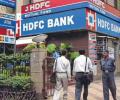
This will be the lender's first result after its merger with HDFC Ltd, effective from July 1, and will keep analysts glued to the management's earnings growth guidance for the merged financial behemoth.

Poor earnings show in the September quarter (Q2FY24), with hints of likely weakness in asset quality going ahead, forced analysts to cut earnings estimates of SBI Cards and Payment Services (SBI Card). On the bourses, shares of the State bank of India arm tumbled 7.4 per cent to Rs 732 apiece on the BSE in the intraday trade as investors factord in near-term concerns. Analysts at Motilal Oswal Financial Services, for instance, slashed SBI Card earnings by 8 per cent and 10 per cent for FY24 and FY25, respectively, as they expect the company to face pesistent magin pressure.

Despite the best ever quarterly net profit of Rs 3,091 crore during April-June of financial year 2023-24 (Q1FY24), challenges are mounting for InterGlobe Aviation-run IndiGo in the near term, said analysts. Given this, most brokerages have retained their ratings from 'buy to underperform', as well as their target price for the stock. For instance, Motilal Oswal Financial Services has retained its 'neutral' rating on the scrip as it believes the low-cost airline is facing teething issues at present.

Bajaj Finance's quarterly business update, coupled with around 24 per cent fall over the past six months, has turned risk-reward favourable for investors, observe analysts. They see up to 39 per cent upside in the stock, from a one-year perspective. Global brokerage CLSA, for instance, has upgraded the stock from 'underperform' to 'outperform' with an increased one-year target price of Rs 6,600 (vs Rs 6,000 earlier) as it believes the risk-reward has turned favourable for the counter, and there is scope for expansion if growth remains robust.

The rupee depreciated 39 paise to an all-time low of 82.69 against the US dollar in early trade on Monday as elevated crude oil prices and risk-averse sentiment among investors weighed on the local unit. Moreover, a negative trend in domestic equities and firm American currency sapped investor appetite, forex traders said. At the interbank foreign exchange, the rupee opened at 82.68 against the greenback, then slipped further to 82.69, registering a fall of 39 paise over its previous close.

The rupee depreciated further by 13 paise to hit a new life-time closing low of 82.30 against the US dollar on Friday as a firm American currency and risk-averse sentiment among investors weighed on the local unit. Moreover, a negative trend in domestic equities and elevated crude oil prices sapped investor appetite, forex traders said. At the interbank foreign exchange market, the local currency opened at 82.19, then fell further to 82.43. It finally settled at an all-time low of 82.30 against the American currency, registering a decline of 13 paise over its previous close.

The Russia-Ukraine conflict, which has spooked financial markets globally, will set the tone for Dalal Street this week amid concerns over energy prices and foreign fund outflows, analysts said. Participants will also track key macroeconomic signals like GDP estimates and PMI data for manufacturing and services sectors to be announced this week, they added. "With earnings season behind us and given the overall sentiments, markets are expected to move in sync with global peers in the coming week. "A close eye will be kept on the developments concerning the Russia - Ukraine crisis and considering the inflation overhang, market participants will also observe movements in energy prices," said Shrikant Chouhan, Head of Equity Research (Retail), Kotak Securities Ltd.

When shares of Nykaa's parent FSN E-Commerce Ventures skyrocketed in debut trade on Wednesday, founder Falguni Nayar and family also saw their wealth surge to nearly $7 billion. And when the markets closed for trade, the wealth was well over $7.5 billion. The dream debut of Nykaa, in a market being flooded with initial share sales, sustained the momentum till the close of the trade as the scrip registered a staggering gain of over 96 per cent to end at Rs 2,206.70 apiece on the BSE.

After a turnaround in performance by Indian equity markets since July that has seen the S&P BSE Sensex and the Nifty50 wipe out the year-to-date losses, analysts suggest investors start nibbling into stocks that are focused on the domestic economy. While they say intermittent corrections, led by policies of global central banks and other economic data, cannot be ruled out, analysts expect India's relative outperformance among global equity markets to continue as it looks better placed with a healthy economic recovery, and remains one of the fastest growing major economies. In this backdrop, Neeraj Chadawar, head of quantitative equity strategy at Axis Securities, believes that amid global slowdown, aggressive tightening by the central banks, and preference for domestic interests first (by the local government), export-oriented themes are likely to be muted or will deliver conservative returns in the near-term.

Reliance Industries may report a muted performance for the April-June quarter of FY24, with most brokerages expecting it to have witnessed a year-on-year (YoY) and quarter-on-quarter (QoQ) contraction in revenue and net profit during the period because of a poor showing by its oil-to-chemicals (O2C) division. The O2C division, which includes refining and petrochemical businesses, accounts for a little over half of RIL's revenue and profit. A muted showing by RIL in the first quarter of 2023-24 may weigh on the overall corporate earnings, as well as the equity markets.

Notwithstanding expectations of a pick-up in construction activity during a seasonally strong January-March quarter (fourth quarter) of 2022-23 (FY23), analysts are cautiously optimistic about the building material sector - encompassing paints, pipes, wood panels, tiles, metals, and cement - as volatile input costs, coupled with fears of a global slowdown, are making demand projections uncertain. Against this backdrop, analysts suggest investors stay selective and pick stocks of companies with stronger brand recall, expanding distribution network, diversified product profile, healthier balance sheet, and sustainable cash flow. "The government's various proposals under Budget 2023-24 (FY24) may lead to the building material segment growing between 8 per cent and 12 per cent for the next five years.

Zomato shares may see limited upside in the near-term amid news-flow around government-backed ONDC expanding its footprint in the delivery market, believe analysts. Zomato shares have dropped 4 per cent in three days on the BSE. By comparison, the benchmark S&P BSE Sensex has added 0.2 per cent.

Patience can be rewarding. 'Post-listing, sanity often returns to valuations of newly-listed businesses within six to nine months. Buy then.'
Vedanta Limited (Vedanta) helping its parent and group holding company Vedanta Resources to deleverage its balance sheet has started to strain its balance sheet. Vedanta's gross debt (consolidated) was up 24.3 per cent year-on-year (YoY) in FY23 and reached a six-year high of Rs 66,628 crore by the end of March. Similarly, its net debt went up 20.3 per cent YoY to Rs 45,706 crore at the end of FY23, up from Rs 38,228 crore a year ago; it was the highest since FY20.

Lump sum investments in equity and hybrid schemes of mutual funds (MFs) declined to Rs 17,900 crore in October - the lowest since January 2021. The fall in lump sum investments comes even as flows through systematic investment plans (SIPs) rose to a new all-time high of Rs 13,000 crore in October. The latest lump sum tally is just a third of the peak inflow of Rs 49,700 crore in July 2021.

Despite gold prices hitting record highs, analysts aren't gung-ho about the outlook for gold financiers Muthoot Finance and Manappuram Finance. This, they said, was due to intense competition from banks, coupled with stagnating loan books and likely pressure on margins.
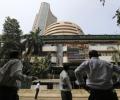
Trading sentiment in the equity markets this week will be guided by global cues, Covid-19 trends and quarterly earnings by market heavyweight TCS, analysts said. Investors will also monitor movement of rupee and crude oil as well as progress of monsoon, they added.

Investors' wealth eroded by a massive Rs 8,21,666.77 crore on Monday as the market saw a massive sell-off not seen in many months. The BSE benchmark Sensex plunged 1,170.12 points or 1.96 per cent to close at 58,465.89. This is the worst single-day drop for the gauge in over seven months. This was also the fourth straight session of decline for the Sensex.

Shares of Zomato on Friday zoomed nearly 53 per cent in its debut trade against its issue price of Rs 76. The stock made its debut at Rs 115, reflecting a huge gain of 51.31 per cent against the issue price on the BSE. It then hit a high of Rs 138, a jump of 81.57 per cent.

The Fed interest rate decision, domestic macroeconomic data announcements and quarterly earnings will be the major sentiment drivers for the equity market in a holiday-shortened week ahead, analysts said. Investors will also take cues from the monthly auto sales numbers to be announced on Monday. Equity markets will remain closed on Thursday for Diwali Laxmi Pujan and on Friday for Diwali Balipratipada.

The rupee tumbled 19 paise to close at a fresh lifetime low of 77.93 against the US dollar on Friday as rising crude oil prices and unabated foreign capital outflows soured sentiment. A sell-off in equity markets and stronger greenback overseas also weighed on the domestic unit, forex traders said. At the interbank foreign exchange market, the local currency opened at 77.81 and witnessed an intra-day high of 77.79 and a low of 77.93 against the US dollar.
Given the prevailing uncertainties, investors must maintain a 10-15 per cent allocation to gold in 2023.

Street gave a thumbs down to Aditya Birla Fashion and Retail (ABFRL)-TCNS Clothing deal as analysts flagged near-term profitability risks for ABFRL with its latest acquisition. At the bourses, shares of the Aditya Birla group company tumbled 6.2 per cent in the intra-day trade, before settling 3.27 per cent lower at R 207.2. Those of TCNS, meanwhile, plunged 20 per cent to end at Rs 416.64.

The rupee plunged 90 paise to close at an all-time low of 80.86 (provisional) against the US dollar on Thursday after the US Federal Reserve's interest rate hike and its hawkish stance weighed on investor sentiments. Forex traders said the US Fed's rate hike and escalation of geopolitical risk in Ukraine sapped risk appetite. Moreover, the strength of the American currency in the overseas market, a muted trend in domestic equities, risk-off mood and firm crude oil prices weighed on the rupee.
Analysts believe that investors should look at stocks that hit 52-week lows only if they have a dividend paying track record, are debt-free and have sound fundamentals.
Currently, trades on the Indian stock exchanges are settled within two days, just like most major markets such as Singapore, Hong Kong, Australia, Japan, and South Korea. Indian exchanges, however, will be moving to T+1 settlement from February 25 in a phased manner.

Gland Pharma, promoted by China's Fosun, has extended its gains, is up 40 per cent since its listing.

At Rs 919 crore, InterGlobe Aviation, the parent firm of low-cost airline IndiGo, posted its best-ever fourth quarterly net profit in the January-to-March quarter (Q4) of financial year 2022-23 (FY23). The bottom-line, however, was lower than the Street's expectations where estimates ranged from Rs 1,160 crore to Rs 2,180 crore. On the bourses, shares of IndiGo have added just 30 paise (0.01 per cent) since the announcement of the Q4-FY23 results on May 18.

The earnings are, however, expected to be down around 2 per cent on a sequential basis due to pent-up demand getting exhausted and the adverse impact of rising metals and energy prices on consumer goods and manufacturing companies.

Macroeconomic data announcement, Omicron situation and global trends will be the major driving factors for the equity market in the first week of the new year 2022, according to analysts. In what turned out to be a historic year, the Indian stock indices went past multiple milestones and the 30-share Sensex made an annual gain of 10,502.49 points or 21.99 per cent in 2021. Religare Broking Vice-President (Research) Ajit Mishra said, "This week marks the beginning of a new month and participants will be closely eyeing some crucial high-frequency data like monthly auto sales, India manufacturing PMI and India services PMI. "Besides, updates on the COVID-19 situation and performance of global markets will also be critical."

This correction has given a good entry for long-term investors. One should buy quality stocks and those with growth potential.

Despite a healthy March-May quarter (Q3FY22) show by global IT consulting firm Accenture, Indian IT companies shed up to 3 per cent on the National Stock Exchange (NSE) on Friday as analysts continued to highlight medium-term pain points for the sector. The Nifty IT index settled 0.9 per cent lower on Friday, as against a 0.9 per cent rise in the Nifty50 index. According to analysts at ICICI Securities, Accenture's Q3 saw moderation in year-on-year growth rate across verticals and US regions, which signals at likely normalisation in revenue momentum for Indian IT services going forward.

Dalal Street investors became richer by more than Rs 16.36 lakh crore this year as the equity market scaled new highs despite persistent geopolitical uncertainties and inflation worries. Analysts attributed better macroeconomic fundamentals, the confidence of retail investors and foreign investors investing again in the domestic equities towards the latter half of 2022 as the key factors that led to the outperformance of the Indian market in comparison to many other stock markets worldwide. During the initial part of the year, markets were jolted by the Russia-Ukraine war.
RBI policy, macro data, company earnings to decide market course this week: Experts
